The Science of Nocturnal Xerostomia
Medically reviewed content. Written with guidance from licensed dental practitioners.
Xerostomia — the sensation of dry mouth — affects an estimated 20% of the general population, rising to as much as 30% in women and up to 50% in older adults. For many people, it’s specifically worse at night, and this isn’t just a subjective impression: it’s rooted in real, measurable biology. This guide covers the actual physiology behind nighttime dry mouth, what the research shows about each contributing factor, and which management strategies have genuine evidence behind them.
The Physiology: Saliva Really Does Follow a 24-Hour Clock
This is the foundational fact that explains almost everything else on this list. Salivary flow isn’t constant throughout the day — it follows a genuine circadian rhythm, driven by clock genes expressed directly in salivary gland tissue. Research measuring saliva at multiple points across 24-hour periods has consistently found flow rate peaks during daytime hours and reaches its lowest point during sleep, a pattern documented using cosinor analysis (a statistical method for confirming genuine biological rhythms) as far back as classic salivary physiology studies and confirmed by more recent circadian biology research identifying the specific clock genes (Bmal1, Clock, Per1, Per2) expressed in salivary gland cells.
This isn’t a minor dip — reduced nocturnal flow measurably decreases the mouth’s buffering capacity and mechanical microbial clearance while increasing local acid exposure, creating what researchers describe as a physiologically distinct oral environment during sleep compared to waking hours. Average unstimulated salivary flow in healthy people ranges from roughly 0.3 to 0.5 mL per minute while awake; flow rates of 0.1 mL per minute or lower are considered clinically significant hyposalivation — and nighttime flow can drop well into or below that range even in people without a diagnosed dry mouth condition.
In simple terms: your mouth is biologically designed to make less saliva while you sleep — this isn’t a malfunction, it’s a normal daily rhythm. The problem is that for many people, this normal dip becomes uncomfortable or even disruptive enough to wake them.
Beyond flow rate, saliva’s protective components also shift on their own daily schedule. Secretory IgA — an antibody that helps protect oral tissue from infection — actually peaks in concentration during sleep as a kind of compensatory adjustment for the reduced flow, while cortisol follows its own separate rhythm, peaking shortly after waking. This tells us the body isn’t simply “shutting off” oral defenses at night; it’s reallocating them, though not always enough to fully offset the discomfort of reduced flow.
Why Nighttime Xerostomia Happens: The Full Picture
1. The Baseline Circadian Reduction (Described Above)
This is the universal starting point — everyone’s saliva production drops at night to some degree. What varies is how much that normal dip translates into uncomfortable dryness, which depends on the additional factors below stacking on top of it.
2. Mouth Breathing
Mouth breathing during sleep — common with nasal congestion or sleep apnea — exposes oral tissue directly to airflow without the protective moisture saliva normally provides, compounding the circadian reduction already in effect.
3. Sleep Position
Back-sleeping tends to encourage mouth breathing, while side-sleeping may allow saliva to pool and temporarily ease dryness — though shifting position during the night can undo this benefit as the night goes on.
4. Medications — By Far the Most Quantifiable Factor
This deserves the most detail, since it’s genuinely the largest modifiable contributor for many people, and the numbers are specific enough to be useful. More than 500 commonly used medications are associated with xerostomia, spanning antidepressants, antihypertensives, opiates, bronchodilators, proton-pump inhibitors, antipsychotics, antihistamines, and diuretics. Medication-induced xerostomia specifically is estimated to affect 12–39% of people taking these drugs.
Anticholinergic medications carry particularly well-documented risk. One large clinic-based study of 490 patients with medication-induced xerostomia found nearly half were taking at least one anticholinergic drug, and researchers have noted a 70% increase in polypharmacy (five or more medications) alongside rising anticholinergic exposure in the population generally since the mid-1990s — a genuine trend, not just increased awareness. Among specific drug classes, prevalence data is notably precise: amitriptyline (a tricyclic antidepressant) causes xerostomia in an estimated 30–50% of users, paroxetine in 20–40%, and clozapine in 10–30%, with anticholinergic medications overall implicated in 20–65% of cases depending on the specific drug and dose.
What to look for: if you take multiple medications from these classes simultaneously, the effect appears to compound — daytime and nighttime dryness both worsen with cumulative anticholinergic burden, which is measured clinically using scales like the Anticholinergic Cognitive Burden (ACB) scale. This is genuinely useful information to bring to a prescribing provider, since dose or medication adjustments specifically targeted at reducing anticholinergic load have documented benefit (detailed in the treatment section below), rather than dry mouth simply being an unavoidable side effect to tolerate.
5. Dehydration
Inadequate fluid intake during the day, compounded by evening alcohol or caffeine (both mild diuretics), can leave someone genuinely dehydrated heading into a period when saliva production is already naturally reduced — a double effect rather than two separate problems. Alcohol specifically has a direct drying effect on oral tissue beyond its diuretic properties, which is part of why an evening drink can produce noticeably worse morning dry mouth than the same amount of fluid loss from caffeine alone. This timing matters: fluid consumed earlier in the day has more opportunity to be absorbed and support normal saliva production before the natural nighttime decline sets in, while fluid consumed right before bed mostly just adds to nighttime urination rather than meaningfully offsetting the circadian dip in flow.
6. Environmental Factors
Dry indoor air, particularly from heating or air conditioning, increases evaporative moisture loss from oral tissue, adding an environmental layer on top of the biological nighttime reduction.
7. Sleep Apnea — A Specific, Well-Studied Connection
This connection is worth detailing precisely, since it’s more than a general association. A study specifically examining xerostomia in sleep apnea-hypopnea syndrome (SAHS) patients compared to healthy controls found 45% of SAHS patients experienced xerostomia upon waking, compared to 20.4% of controls — roughly double the rate. This gap narrowed during the day (21.7% versus 9.3%) but remained substantial. Higher BMI was correlated with a stronger SAHS-xerostomia association, and patients with moderate SAHS reported more frequent xerostomia than those with mild SAHS, suggesting a dose-response relationship with disease severity. Interestingly, the study found xerostomia frequency was numerically higher among patients using CPAP therapy, though this specific difference didn’t reach statistical significance — suggesting CPAP may contribute to dry mouth for some users, but isn’t the primary driver of the overall SAHS-xerostomia connection.
8. Existing Oral Health Issues
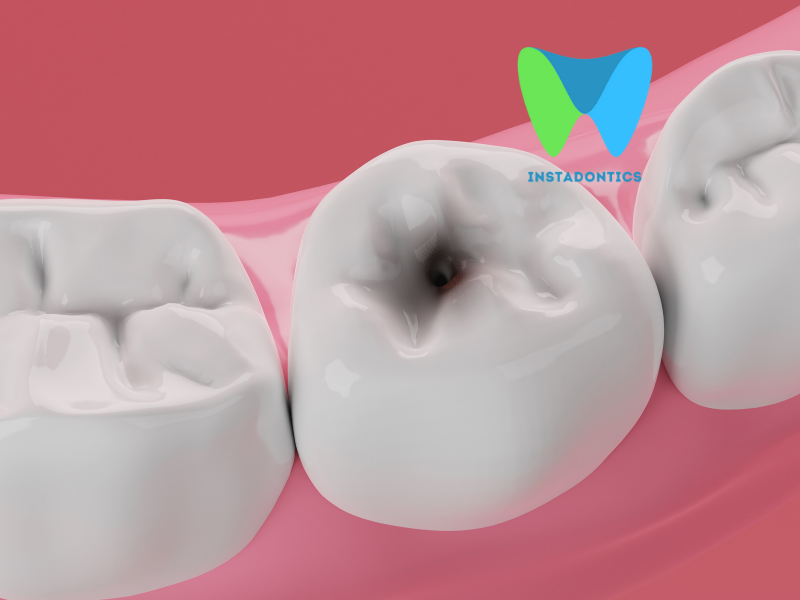
Cavities and gum disease are both more common with chronic dry mouth, and can independently cause discomfort that becomes more noticeable at night when other distractions are absent and a person is more attuned to how their mouth feels. This runs in both directions: saliva normally provides continuous, if modest, protection against cavity-causing acid and bacterial buildup, so reduced flow — whether from the normal nighttime dip or a chronic dry mouth condition — removes a layer of natural defense precisely during the hours when teeth are least protected and most vulnerable to overnight bacterial activity.
People with chronic xerostomia are consistently found to have higher rates of dental caries, and the pattern of decay often differs from typical cavities, showing up along the gumline and root surfaces rather than the chewing surfaces most commonly affected in people with normal saliva flow — a distinction that can help a dentist recognize dry mouth as a contributing factor even in a patient who hasn’t mentioned it as a primary complaint.
Managing Nighttime Xerostomia: What Actually Has Evidence Behind It
Medication Review — Often the Highest-Leverage Step
Given how quantifiable the medication data is above, this deserves to be the first strategy considered rather than the last. Research specifically following patients treated at a dedicated xerostomia clinic found that among those whose treatment included addressing xerogenic medications, xerostomia improved in 75.3% of cases overall — and even among patients on three or more anticholinergic medications, roughly 60% still saw improvement with treatment, showing benefit is achievable even in more complex medication situations, not just simple one-drug cases.
Saliva Substitutes and Oral Lubricants
These have genuine trial support, though the evidence base is smaller than for medication management. A randomized trial of a saliva-substitute oral spray designed specifically for drug-induced xerostomia found the treatment improved dry mouth symptoms compared to control. Separately, research on sucking pastilles or chewing gum for dry mouth found benefit through two combined mechanisms: mechanical stimulation from the sucking or chewing action itself, and a gustatory effect from flavor release, both of which can meaningfully increase salivary flow rate even when the underlying cause of dryness isn’t resolved.
Xylitol and Malic Acid-Based Products
Sugar-free gum or lozenges containing xylitol serve a dual purpose for dry mouth sufferers — stimulating saliva flow mechanically while providing the cavity-protective benefit relevant to anyone with reduced saliva (who face elevated cavity risk from lost natural protection). Malic acid has separately been studied as a salivary stimulant; while early formulations were dropped due to enamel-demineralizing effects, more recent research on lower-concentration malic acid combined with xylitol and fluoride has found a meaningfully reduced demineralization risk while retaining the salivary stimulant effect.
Environmental and Behavioral Measures
- A bedside glass of water for sipping during nighttime awakenings
- A humidifier, particularly relevant in heated or air-conditioned bedrooms, to offset the environmental evaporation factor
- Consistent oral hygiene before bed, since reduced nighttime saliva means less natural protection against the bacteria and acid that accumulate overnight
- Addressing mouth breathing directly — nasal strips, treating underlying congestion, or evaluating for sleep apnea if snoring or witnessed breathing pauses are also present
When Sleep Apnea Is a Factor
Given the roughly doubled rate of morning xerostomia found in SAHS patients, anyone with dry mouth alongside snoring, witnessed breathing pauses, or excessive daytime fatigue should consider a sleep evaluation — treating the underlying sleep apnea may address the xerostomia as a secondary benefit, even though the CPAP-xerostomia relationship itself is more complicated than simply cause-and-effect.
Frequently Asked Questions About Nighttime Dry Mouth:
Why is dry mouth specifically worse at night compared to during the day?
Salivary flow follows a genuine circadian rhythm, driven by clock genes in the salivary glands themselves, and reaches its lowest point during sleep in essentially everyone — nighttime dryness is a normal biological dip that becomes uncomfortable when other contributing factors (medications, mouth breathing, dehydration) stack on top of it.
How common is dry mouth overall?
Estimates place general population prevalence around 20%, rising to roughly 30% in women and as high as 50% in older adults, making it a considerably more common issue than it’s often treated as.
Which medications are most likely to cause dry mouth?
Amitriptyline (30–50% of users), paroxetine (20–40%), and clozapine (10–30%) show some of the highest documented rates, and anticholinergic medications as a broader category are implicated in 20–65% of medication-related xerostomia cases depending on the specific drug and dose.
Is there a real connection between sleep apnea and dry mouth?
Yes — one study found 45% of sleep apnea patients experienced morning xerostomia compared to 20.4% of healthy controls, roughly double the rate, with the association growing stronger in patients with higher BMI and more severe sleep apnea.
Does CPAP therapy cause dry mouth?
The evidence is mixed — one study found a numerically higher rate of xerostomia among CPAP users, but the difference wasn’t statistically significant, suggesting CPAP may contribute for some users without being the primary driver of the broader sleep-apnea-xerostomia connection.
Can adjusting my medications actually fix nighttime dry mouth?
For many people, yes — research following patients at a dedicated xerostomia clinic found xerostomia improved in about 75% of cases when treatment addressed the underlying medication factors, with meaningful improvement seen even in patients taking multiple anticholinergic medications simultaneously.
Do saliva substitutes and dry-mouth sprays actually work?
Clinical trial evidence supports their use — a randomized trial of a saliva-substitute spray designed for drug-induced xerostomia showed measurable symptom improvement, and xylitol-containing gums or lozenges provide a documented dual benefit of stimulating flow while protecting against the elevated cavity risk that comes with reduced saliva.
Does drinking water right before bed help with nighttime dry mouth?
Less than most people expect — fluid consumed well before bedtime has more time to support normal saliva production, while fluid taken right before sleep mostly just increases the likelihood of a nighttime bathroom trip rather than meaningfully offsetting the circadian dip in flow that happens regardless of hydration status.
Bottom Line
Nighttime dry mouth isn’t just bad luck or “in your head” — it’s rooted in a real, well-documented circadian dip in salivary flow that affects nearly everyone to some degree, made worse by specific, quantifiable factors like medication use, mouth breathing, and sleep apnea. The most actionable finding from the research: medication review is a genuinely high-leverage intervention, with roughly three-quarters of patients in clinical treatment settings seeing real improvement once xerogenic medications are addressed — worth raising directly with a prescribing provider rather than assuming nighttime dryness is simply something to live with. If dry mouth is severe, persistent, or accompanied by signs of sleep apnea, a proper medical evaluation can identify a specific, treatable cause rather than leaving you to manage symptoms indefinitely.
References
- “Clock Genes Show Circadian Rhythms in Salivary Glands.” PMC — https://pmc.ncbi.nlm.nih.gov/articles/PMC3398790/
- “Circadian rhythms in human salivary flow rate and composition.” PubMed — https://pubmed.ncbi.nlm.nih.gov/5016036/
- “The significance of saliva during sleep and the relevance of oromotor movements.” ScienceDirect — https://www.sciencedirect.com/science/article/abs/pii/S1087079201901832
- “Xerostomia Induced by Psychiatric Medications: Prevalence, Impact, and Management.” PMC — https://www.ncbi.nlm.nih.gov/pmc/articles/PMC12437780/
- “Characteristics of medication-induced xerostomia and effect of treatment.” PLOS One — https://journals.plos.org/plosone/article?id=10.1371%2Fjournal.pone.0280224
- “Medication-Induced Xerostomia: Cross-Sectional Analysis of Salivary Flow, Intraoral Aching, and Anxiety.” PMC — https://www.ncbi.nlm.nih.gov/pmc/articles/PMC12470855/
- “Randomized trial of the efficacy and safety of a new oral spray for drug-induced xerostomia.” PMC — https://www.ncbi.nlm.nih.gov/pmc/articles/PMC5839221/
- “Effect of a newly developed pastille on the salivary flow rate in subjects with dry mouth symptoms.” PMC — https://www.ncbi.nlm.nih.gov/pmc/articles/PMC7953607/
- “Effectiveness of malic acid 1% in patients with xerostomia induced by antihypertensive drugs.” PMC — https://www.ncbi.nlm.nih.gov/pmc/articles/PMC3548619/
- “Xerostomia.” StatPearls, NCBI Bookshelf — https://www.ncbi.nlm.nih.gov/books/NBK545287/
This article summarizes findings from published clinical studies and physiological research; it is not a substitute for personalized advice from a licensed healthcare provider. If dry mouth is persistent or severe, consult a doctor or dentist for evaluation.